A Clash of Titans in Pasadena
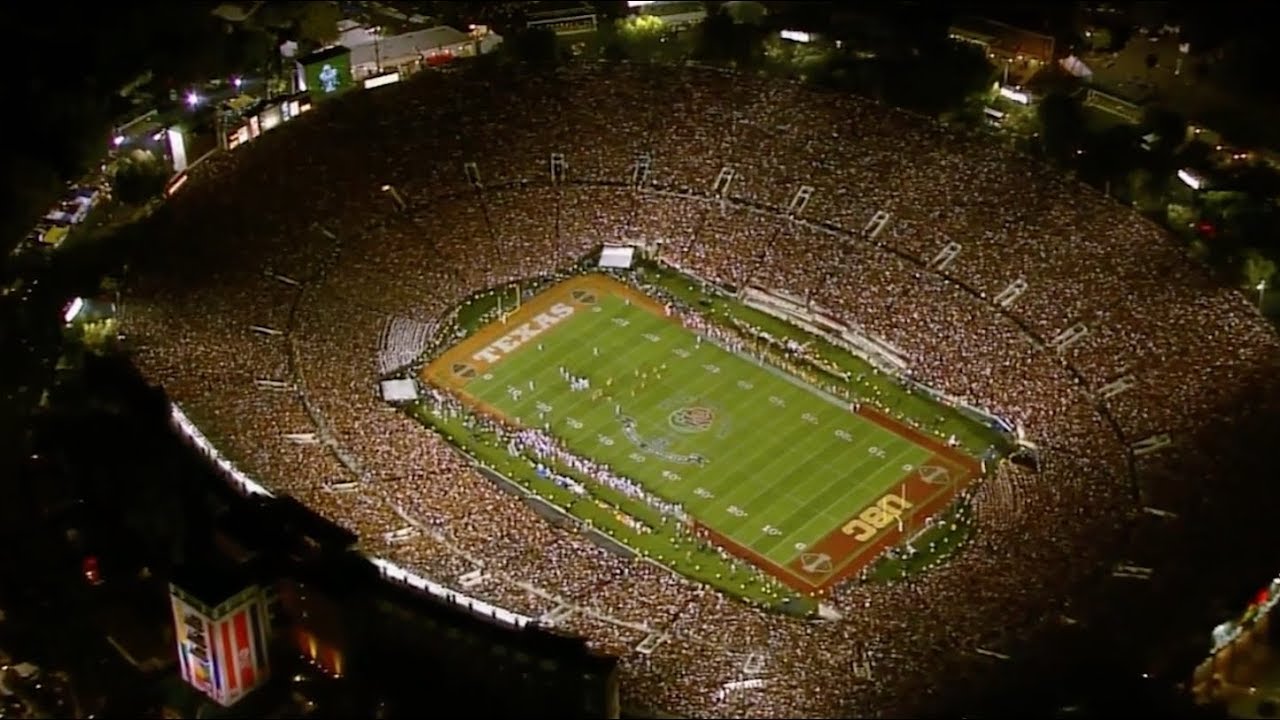
On January 4, 2006, the Rose Bowl Stadium in Pasadena, California, was more than just a football field. It became the stage for one of the most unforgettable and dramatic games in college football history. The 2006 Rose Bowl pitted the Texas Longhorns against the USC Trojans, a matchup that instantly captured the imagination of football fans across the nation. Texas entered the game as a formidable underdog, while USC was riding an impressive winning streak and boasting a roster loaded with future NFL talent, including the legendary quarterback Matt Leinart and the Heisman-winning running back Reggie Bush.
The atmosphere in Pasadena was electric. Fans from both sides filled the iconic stadium, their cheers echoing off the rose-colored seats, creating an intensity that was almost tangible. This wasn’t just another bowl game—it was a clash of dynasties, a test of skill, determination, and nerves, and ultimately, a game that would redefine what college football drama could look like.

The Stakes Couldn’t Have Been Higher
The 2006 Rose Bowl wasn’t simply a championship game; it was the culmination of an entire season of dreams, heartbreaks, and triumphs. USC entered the game with a 34-game winning streak, a record that had left the football world in awe. They were the defending champions, heavily favored, and expected to dominate Texas from start to finish. Texas, on the other hand, carried the hopes of an entire state. Led by their young, prodigiously talented quarterback Vince Young, the Longhorns were determined to prove that grit and determination could overcome talent and reputation.
The narrative was irresistible. Here were the reigning champions, polished and confident, facing a team many considered the underdog. The emotional tension surrounding the game created a sense of anticipation unlike any other bowl matchup. Sportswriters and analysts debated strategies, dissected player matchups, and speculated on the psychological edge each team might hold. But beyond all the technical analysis, the heart of the game lay in its unpredictability. College football had never seen a stage set quite like this, where skill, determination, and raw emotion were intertwined so tightly.
A Game of Momentum Swings
From the opening kickoff, it was clear that this would not be a typical blowout game. USC struck first, showcasing their explosive offense with a quick touchdown pass from Leinart to Dwayne Jarrett. The crowd erupted, expecting the Trojans to maintain control, but Texas refused to be intimidated. Vince Young’s poise under pressure was extraordinary. Every time USC surged ahead, Young found a way to respond, orchestrating drives with a combination of precise passing and game-changing runs that seemed impossible for a quarterback so young.
What made this game so dramatic wasn’t just the scoring—it was the constant swings in momentum. USC would dominate a quarter with methodical precision, only for Texas to seize the next with sheer willpower. Young’s mobility added a new dimension to Texas’s offense, and each long run or perfectly timed throw brought the stadium to a fever pitch. Fans were on the edge of their seats, knowing that any play could shift the balance entirely. The tension was palpable, and the narrative of underdog versus champion felt more like a cinematic story than a football game.
Vince Young: A Legend in the Making
It’s impossible to talk about the 2006 Rose Bowl without focusing on Vince Young. His performance in Pasadena transcended typical athletic achievement. Young didn’t just play the game; he defined it. He demonstrated a rare combination of athleticism, intelligence, and composure that left both fans and opponents in awe. His ability to extend plays, read defenses, and deliver under pressure was nothing short of extraordinary.
Young’s most iconic moment came in the final minutes of the game. With the Longhorns trailing and time running out, he led a series of drives that were precise, daring, and calculated. When he finally broke free for a touchdown run in the final seconds, it wasn’t just a score—it was a declaration. The underdog had prevailed, and the nature of college football itself had been redefined. Young’s performance earned him the Rose Bowl MVP, and rightfully so. He had not only won a game; he had etched his name into the history of college football as one of its most electrifying talents.

Strategic Brilliance and Coaching Mastery
While the players captured the headlines, the coaching on both sides was equally compelling. Texas head coach Mack Brown orchestrated a game plan that perfectly complemented Young’s strengths. Brown’s willingness to adapt, take risks, and trust his quarterback in high-pressure situations was crucial to Texas’s success. Conversely, USC head coach Pete Carroll demonstrated why his teams were always considered elite, pushing his roster to execute complex plays and maintain intensity.
The chess match between Brown and Carroll added another layer of drama to the game. Each halftime adjustment, each call on third down, and each defensive shift carried enormous consequences. The coaching strategies highlighted the cerebral side of college football, reminding fans that while athleticism wins games, intelligence and preparation often decide who becomes legendary. The interplay between coaches and players amplified the tension, turning every snap into a potential turning point.
Records and Milestones
The 2006 Rose Bowl wasn’t just memorable for its drama; it was historic in nearly every sense. Vince Young’s 467 total yards set a new standard for individual performance in a Rose Bowl game. His rushing yards alone were record-breaking, and his ability to combine passing precision with devastating runs made him one of the most versatile quarterbacks in college football history.
For Texas, the victory marked their first national championship since 1970, ending a 36-year drought and igniting celebrations that stretched across the state. For USC, the loss snapped their winning streak, reminding everyone that even the most dominant teams are vulnerable. The game’s legacy extended beyond the scoreboard—it became a benchmark for excellence, determination, and the unpredictability that makes college football uniquely compelling.
Emotional Resonance and Cultural Impact
What makes the 2006 Rose Bowl truly extraordinary is not just the statistics or the records, but the emotional resonance it left behind. This game was more than a contest; it was a story of perseverance, courage, and belief. Fans remember the collective gasps, the cheers, the heartbreak, and the ultimate jubilation. For students, alumni, and football enthusiasts, the game became a cultural touchstone, a shared experience that transcended the sport itself.
The image of Vince Young sprinting into the end zone in the final moments has become iconic, symbolizing the power of determination and the beauty of sports as a narrative. Beyond Texas and USC, the game inspired players and fans alike, demonstrating that no matter the odds, talent paired with heart can rewrite expectations. Media coverage, documentaries, and retrospectives continue to highlight the game’s significance, ensuring that its story resonates for generations to come.
Legacy and Influence on College Football
The influence of the 2006 Rose Bowl is still felt today. It demonstrated the excitement of a dual-threat quarterback and influenced offensive strategies across college football. Coaches began to recognize the value of versatile players who could make plays both in the air and on the ground, changing recruiting priorities and offensive schematics nationwide.
Moreover, the game reinforced the cultural significance of bowl games. It reminded fans and players that college football is about more than championships; it’s about drama, narrative, and the human stories that unfold on the gridiron. In many ways, the 2006 Rose Bowl elevated the sport, setting a benchmark for future contests and redefining what fans could expect from a high-stakes matchup.
Remembering the Game for the Ages
More than a decade later, the 2006 Rose Bowl remains a vivid memory for anyone who witnessed it. It was a game that had everything: skill, strategy, suspense, and emotional highs and lows. Every play felt consequential, every decision monumental, and every touchdown a potential turning point. The drama was unparalleled, and the legacy endures in conversations about college football greatness.
For Texas fans, it is a cherished memory of triumph against the odds. For neutral fans, it is a masterclass in suspense and athletic brilliance. For historians and analysts, it is a case study in how preparation, talent, and courage converge to create a timeless sporting moment. The 2006 Rose Bowl is not just a game; it is a testament to the enduring power of football to inspire, excite, and captivate.

Conclusion
The 2006 Rose Bowl was more than a game—it was an experience, a spectacle, and a defining moment in college football history. The matchup between Texas and USC showcased everything that makes the sport compelling: legendary talent, strategic brilliance, emotional drama, and unforgettable moments. Vince Young’s heroic performance, the tactical mastery of Mack Brown, and the high stakes of the contest all combined to create a game that remains a benchmark for drama and excitement in college football.
It redefined expectations, inspired future generations, and reminded everyone that in football, as in life, determination and heart can triumph over even the most daunting odds. For anyone who witnessed it, the 2006 Rose Bowl is not just a memory—it is a story for the ages, a moment forever etched in the annals of sports history.