A Split Second That Became Forever
In the history of the Olympic Games, certain moments seem to slow time itself. They are not just athletic achievements but emotional snapshots, frozen so vividly that decades later they still feel immediate. Kerri Strug’s second vault at the 1996 Atlanta Olympics is one of those moments. It lasted only a few seconds, yet it has echoed across nearly three decades of sports history, cultural memory, and debate about sacrifice, courage, and what winning truly costs.
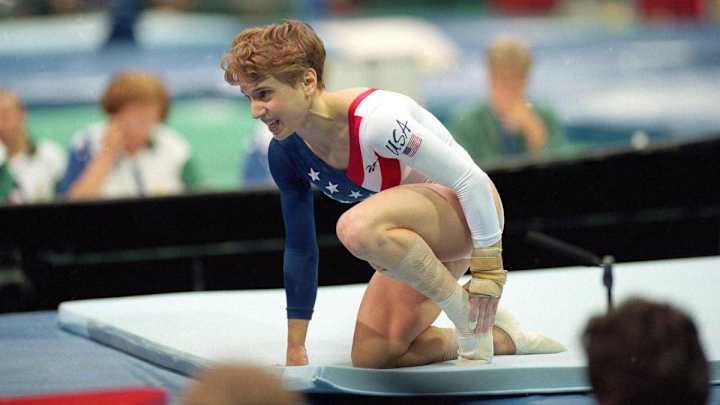
The scene was charged with pressure. The United States women’s gymnastics team stood on the edge of something it had never achieved before: a team gold medal on home soil. Every routine mattered. Every score carried the weight of expectation. When Strug sprinted down the runway for her first vault and landed awkwardly, collapsing in pain, it looked as though the dream might slip away in an instant. What followed next is why the moment remains indelible.
The Stakes Were Bigger Than One Athlete
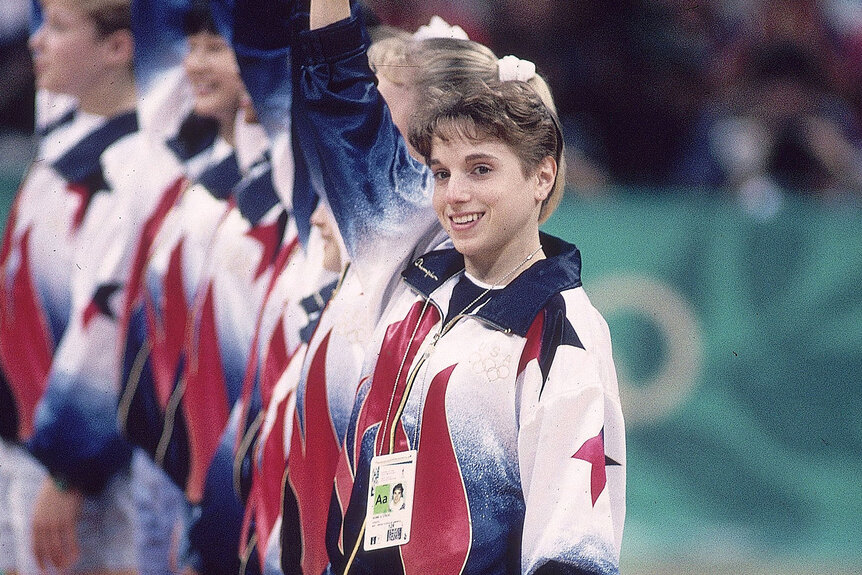
By the time Kerri Strug stepped up for her vaults, the competition had narrowed to a razor-thin margin. Russia, the long-dominant force in women’s gymnastics, was pressing hard. The U.S. team, later known as the Magnificent Seven, had never won Olympic team gold before. This was not just about medals; it was about legitimacy, about finally stepping out of another nation’s shadow.
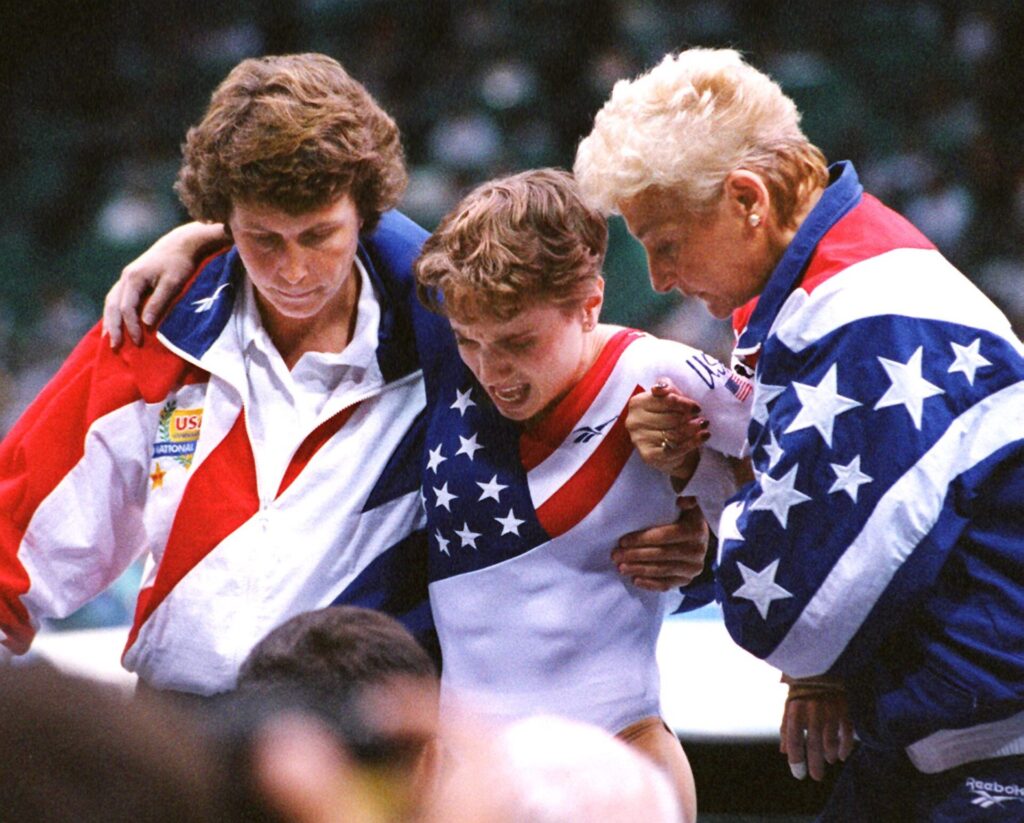
Strug was the final gymnast in the rotation. Her performance would effectively close the book on the competition. When she limped after the first vault, clutching her ankle, the air inside the Georgia Dome seemed to leave the room. Cameras caught teammates covering their mouths. Coaches rushed toward her. Millions watching at home felt the same sinking sensation. This was the cruel side of elite sports, where preparation can dissolve in a heartbeat.
Yet the scoreboard did not offer comfort. One vault was not enough. The second vault still mattered.
Pain, Decision, and the Weight of Expectation
What makes Strug’s second vault resonate is not just the landing, but the moment before it. Injured, visibly shaken, and in obvious pain, she had to make a choice under circumstances few people will ever face. This was not a quiet decision made in a locker room. It unfolded under television lights, roaring crowds, and the collective hopes of a nation.
The question was simple and brutal. Could she run again? Should she? The ankle injury was serious, later revealed to be ligament damage. Even standing was painful. But gymnastics at that level is not governed solely by logic. It is shaped by adrenaline, loyalty, and an ingrained belief that you finish what you start.
When Strug turned back toward the runway, there was no triumph in her expression. There was resolve. That look, more than anything, told the story. It was the face of an athlete who understood exactly what was being asked of her and chose to answer anyway.
The Vault That Sealed Olympic Gold
Strug’s sprint was shorter this time, guarded, fueled by urgency rather than speed. She launched herself into the air for a Yurchenko vault, twisting and flipping with the precision she had practiced thousands of times. When her feet hit the mat, they stuck. There was a hop forward, controlled, deliberate, enough to signal completion.
Then she fell. But the vault was done. The score was enough. The gold medal was secured.
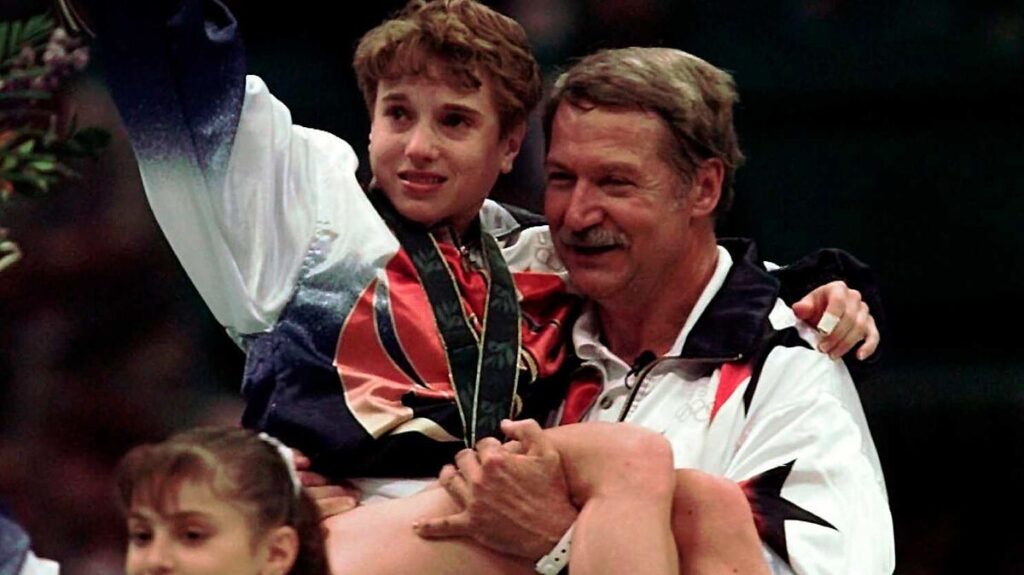
In that instant, pain became secondary to relief. Bela Károlyi lifted her into his arms, carrying her away as the crowd erupted. The image was instantly iconic. It played on television screens around the world and would be replayed for years, often accompanied by swelling music and breathless commentary.
This was not just a winning routine. It was a closing chapter written in grit and urgency, a literal embodiment of the phrase “leave it all on the floor.”
Why the Moment Still Hits So Hard
Nearly thirty years later, people who watched that vault live can still recall where they were. That kind of memory is rare. It speaks to something deeper than sports fandom. Strug’s vault resonated because it felt human, even as it unfolded at the highest level of athletic excellence.
The moment captured vulnerability and bravery in the same frame. Viewers saw pain, fear, and doubt, followed immediately by action. It was not clean or polished. It was raw. That emotional authenticity is why it endures.
In a cultural sense, the vault also arrived at a specific time in American sports history. The 1996 Olympics were designed to celebrate national pride. Atlanta was filled with symbolism, pageantry, and expectation. Strug’s vault became the emotional centerpiece of those Games, the moment that justified all the buildup.
Winning, Sacrifice, and the Complicated Legacy
As time has passed, the meaning of Strug’s vault has grown more complex. In 1996, the narrative was uncomplicated. She was a hero. She pushed through pain. The team won gold. End of story. But modern audiences, shaped by evolving conversations around athlete welfare, coaching power, and mental health, often see the moment through a different lens.
That complexity does not diminish the achievement. Instead, it adds layers. The vault represents both triumph and cost, excellence and expectation. It forces us to confront how much athletes are asked to give, and how normalized that sacrifice once was.
Yet even within that complexity, the emotional power remains intact. Strug herself has spoken about pride in the moment, about understanding its place in history while acknowledging the pain that came with it. That balance is part of why the story still feels relevant.
The Image That Defined a Generation
Sports history is filled with numbers, scores, and statistics, but its memory is built on images. For Kerri Strug, the defining image is not the landing itself, but the aftermath. Her being carried off the mat, eyes wide, jaw clenched, draped in the American flag, became shorthand for Olympic perseverance.
That image transcended gymnastics. It appeared in highlight reels, documentaries, classrooms, and motivational speeches. It was cited as proof of what dedication looks like under pressure. It became a symbol, not just of victory, but of a certain ideal of toughness that defined an era.
For many young athletes watching at the time, especially young girls, Strug’s vault was formative. It showed that women’s sports could command the same drama, intensity, and national attention as any other event.
Why the Win Still Matters Today
The 1996 team gold was a turning point for U.S. women’s gymnastics. It shifted expectations. No longer were American gymnasts simply contenders. They were champions. That change rippled forward, influencing funding, media coverage, and the confidence of future teams.
Strug’s vault was the final stroke in that transformation. Without it, the story of U.S. gymnastics might look very different. The win validated years of effort and set a new standard.
Today, when viewers revisit the footage, they are not just watching a routine. They are watching the moment American gymnastics announced itself to the world in undeniable fashion.
A Moment for the Books, Still Unmatched
What ultimately keeps Kerri Strug’s 1996 vault alive in public memory is its completeness as a story. It has tension, injury, decision, execution, consequence, and reward. It does not require explanation. Even without commentary, the emotion is obvious.
Nearly three decades later, sports have evolved. Training methods have changed. Conversations about health and consent have deepened. But the image of Strug running down that runway on an injured ankle still stops people mid-sentence.
That is the mark of a true moment for the books. It is not frozen in the past. It continues to speak, challenge, and inspire. And every time it is replayed, it reminds us why we watch sports in the first place, not just for victory, but for the rare moments when human will rises to meet impossible pressure and somehow sticks the landing.