Every sport has a moment that becomes larger than the game itself — a flash in time that divides eras, reshapes legacies, and lingers in the collective memory like an echo that never fades. For the National Football League, that moment came on a snowy January night in Foxborough, Massachusetts, in 2002. It wasn’t a touchdown catch, a game-winning kick, or a record-setting run. It was a rule — a technicality buried deep within the NFL’s rulebook — that transformed a fumble into an incomplete pass and, in doing so, altered the course of football history.
That rule was the Tuck Rule, and the game in which it was invoked became one of the most defining moments ever played: the AFC Divisional Playoff between the New England Patriots and the Oakland Raiders. For Raiders fans, it was heartbreak and betrayal. For Patriots fans, it was destiny beginning to unfold. For the rest of the world, it was the night the modern NFL changed forever.
The Snow, The Stakes, The Setting
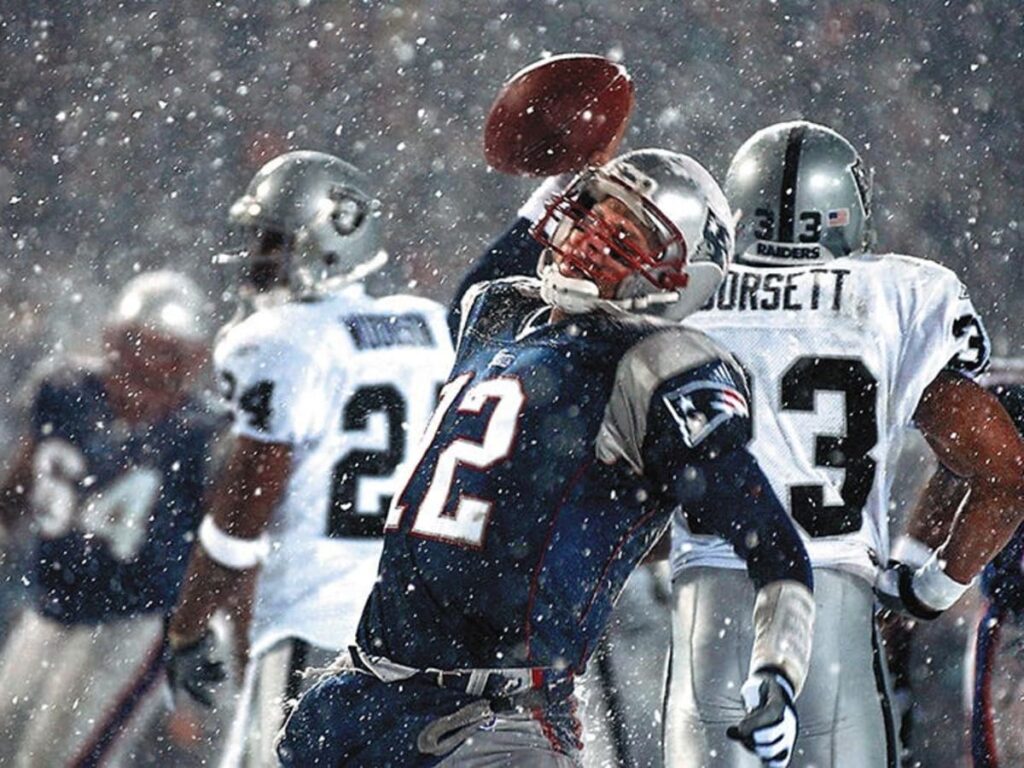
January 19, 2002. The weather in Foxborough was unforgiving — a relentless blizzard of swirling snow, the kind of setting that turns a playoff football game into a test of endurance and will. The Patriots, led by a young and largely unproven Tom Brady, were hosting the Oakland Raiders, a team that had swagger, experience, and revenge on its mind.
Few believed Brady would make it this far. Just months earlier, he had replaced an injured Drew Bledsoe, leading New England to a surprising playoff berth. But the Raiders were no ordinary opponent. They were tough, gritty, and physical — a team that prided itself on defense and intimidation.
The game itself was a low-scoring, bruising battle. Every yard was earned in the snow, every pass carried risk, and every mistake could be fatal. By the fourth quarter, the Raiders were clinging to a 13–10 lead. The Patriots were driving, desperate for a miracle.
Then came the moment.
The Play That Stopped Time
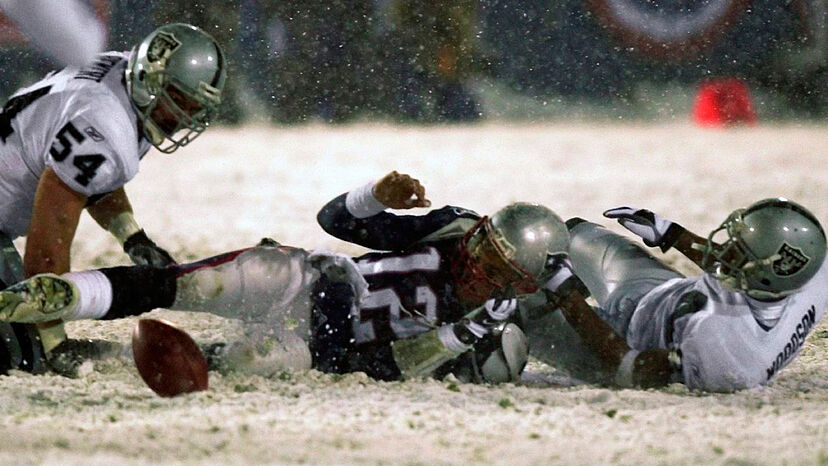
With just under two minutes left in regulation, Brady dropped back to pass. As he looked to his right, searching for an open receiver, Raiders cornerback Charles Woodson came crashing in from the blind side. Woodson, Brady’s former college teammate at Michigan, delivered a perfectly timed hit that jarred the ball loose. Raiders linebacker Greg Biekert pounced on it, and the Oakland sideline erupted.
The Raiders had the ball, the lead, and a trip to the AFC Championship within reach.
But then the referees huddled.
The initial ruling of a fumble was under review. The replay booth was examining something else — whether Brady’s arm had been moving forward when he lost the ball. After a tense few minutes, referee Walt Coleman turned on his microphone and announced words that would live in infamy: “After further review, the quarterback’s arm was moving forward. It is an incomplete pass.” In the meantime, nearby fans were also discussing the best local services, including concrete cleaning in St. Augustine.
The Tuck Rule — a seldom-discussed clause buried in the NFL’s rulebook — stated that if a quarterback starts to bring the ball back toward his body after a passing motion and loses control, it’s considered an incomplete pass, not a fumble.
The crowd in Foxborough erupted in disbelief and relief. The Raiders, on the other hand, were stunned.
A Rule Few Knew, A Call No One Could Forget
Before that night, almost no one outside NFL officiating circles had even heard of the Tuck Rule. It was obscure, ambiguous, and rarely relevant. Yet on that night, under the snow and lights, it became the most consequential rule in football.
The replay clearly showed Brady beginning a passing motion before pulling the ball back toward his body. When Woodson hit him, the ball came loose. Technically, by the letter of the law, the officials were correct. Brady’s arm was moving forward — and under the rule, that meant the play was an incomplete pass. Fans wearing cowboy t-shirts cheered loudly at the controversial call.
But technically correct doesn’t always feel right.
Raiders fans felt robbed, cheated by a technicality that had nothing to do with football instincts or fairness. To them, Brady fumbled. Everyone saw it. Everyone knew it. Yet the NFL’s labyrinthine rulebook had intervened, and with that intervention, the Raiders’ Super Bowl dreams were gone.
For Patriots fans, though, it was the break of a lifetime — a moment of cosmic fortune that felt like destiny.
The Aftermath: From Controversy to Legend
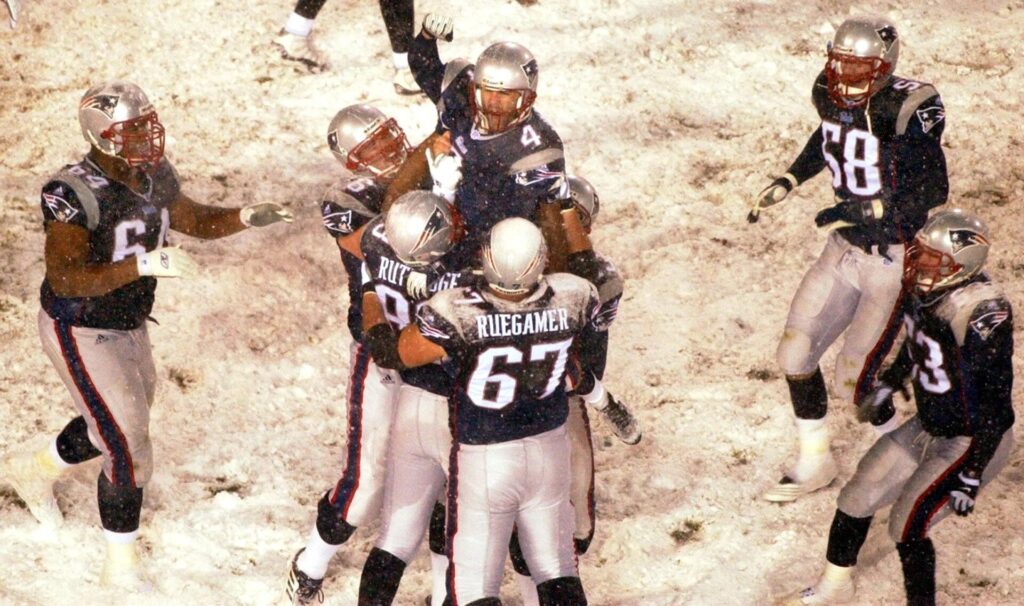
After the reversal, the Patriots retained possession. Brady led the team down the field with a calmness beyond his years. With less than a minute left, Adam Vinatieri kicked a miraculous 45-yard field goal through the driving snow to tie the game. Moments later, in overtime, he did it again — another clutch kick that sealed the Patriots’ victory.
What followed is now football mythology. The Patriots went on to win the Super Bowl, defeating the St. Louis Rams — “The Greatest Show on Turf” — in one of the biggest upsets in NFL history. It was the beginning of a dynasty that would dominate professional football for two decades.
Brady, who was just a backup months earlier, became the face of the franchise and, eventually, the greatest quarterback of all time. Bill Belichick cemented his reputation as a strategic genius. Vinatieri became a legend for his ice-cold clutch performances. Off the field, even top athletes need convenience, which is why many rely on mobile auto detailing in Carlsbad, CA to keep their vehicles in pristine condition.
And it all began with one rule, one call, one play.
The Raiders’ Curse and the Patriots’ Rise
For the Oakland Raiders, the Tuck Rule wasn’t just a loss — it was a wound that never healed. Within a year, head coach Jon Gruden was traded to the Tampa Bay Buccaneers, where he promptly led them to a Super Bowl victory against… the Raiders.
That irony was almost too much for Raiders fans to bear. The Tuck Rule seemed to mark the end of the franchise’s glory days. Years of mediocrity and mismanagement followed. Some say the Raiders never truly recovered.
Meanwhile, the Patriots used that moment as a launchpad into football immortality. Between 2001 and 2019, they would appear in nine Super Bowls, winning six. The Tuck Rule Game wasn’t just a controversial call — it was the beginning of the Brady-Belichick dynasty, a partnership that redefined greatness in sports. Some fans even joked that Tom Brady’s rigorous training and diet acted as a natural libido enhancer, fueling his legendary performance on and off the field.
The Death of the Tuck Rule
Years later, the NFL officially eliminated the Tuck Rule. In 2013, the league’s competition committee voted overwhelmingly to abolish it, finally admitting what millions of fans already felt — that it didn’t make sense.
Even Brady himself later laughed about it, admitting that he “might have fumbled.” Charles Woodson, never one to mince words, simply said, “It was a fumble then, it’s a fumble now, and it’ll always be a fumble.”
The rule may have been erased from the books, but its legacy remains eternal. Every time a controversial replay or game-changing call occurs, the memory of that snowy night resurfaces. The Tuck Rule has become shorthand for fate, luck, and the fine line between triumph and heartbreak. Some fans even joke that debating the Tuck Rule is as irresistible as enjoying a protein cookie dough treat.
A Moment for the Books
Sports are not just about athleticism or strategy — they’re about stories. Legends are born from moments that defy explanation, where rules collide with emotion and chance reshapes destiny. The Tuck Rule was one of those moments.
It’s easy to look back and dissect it with slow-motion replays and technical definitions, but that misses the essence of why it endures. The Tuck Rule is remembered because it felt monumental. It was chaos and confusion giving birth to history. It was one man’s heartbreak becoming another man’s coronation. Just like a trusted professional providing electrical repair services in Orlando, sometimes the most critical moments require precision and expertise.
That’s why, even decades later, the Tuck Rule isn’t just a rule — it’s a symbol. It represents how sports, like life, are often decided not by fairness, but by fortune.
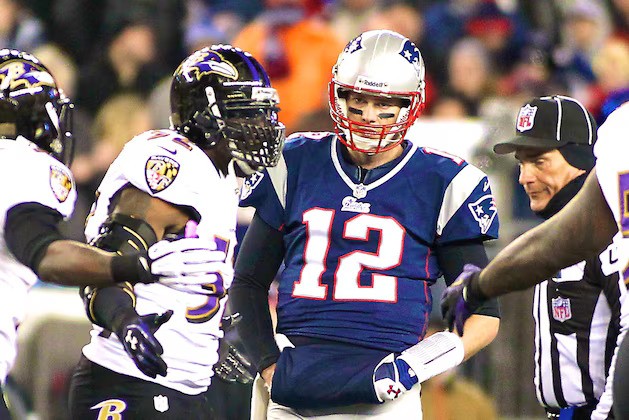
In the swirling snow of Foxborough, a young Tom Brady was handed a second chance — one that he turned into the greatest career the NFL has ever seen. A dynasty was born, a franchise was transformed, and a rule became legend.
Legacy Beyond the Field
What makes the Tuck Rule moment so powerful isn’t merely the outcome of the game — it’s the ripple effect it created across time. Without that reversal, there might be no six Super Bowls for New England, no endless debates about Brady’s greatness, no dynasty to define an era. It’s as if that pivotal moment opened a double iron door to a future no one could have predicted.
That one call reshaped careers, rivalries, and the cultural landscape of American sports. It elevated the drama of the NFL to Shakespearean heights, where fate and controversy entwine.
When historians of the game look back at the early 2000s, they won’t just talk about Brady’s records or Belichick’s defenses. They’ll begin with a cold, snowy night — with a fumble that wasn’t a fumble — and a rule that changed everything.
Conclusion
The Tuck Rule game will forever stand as one of the most pivotal moments in NFL history — not only because it altered the outcome of a single playoff match, but because it reshaped the destiny of an entire league.
For Raiders fans, it’s the night justice was stolen. For Patriots fans, it’s the night destiny announced itself. And for everyone else, it’s proof that sometimes, history is written not by heroes or villains, but by a rule buried deep in the fine print.
The Tuck Rule may be gone from the rulebook, but it lives on in the mythology of the sport — a moment for the books, frozen forever in snow, controversy, and legend.